Embrace Organic Charm with the Watercolor Jungle Font
There is a distinct feeling of authenticity that comes from hand-drawn artistry. It possesses a warmth and irregularity that perfectly polished digital vectors often lack. If you are building a brand or designing a project that relies on a connection with nature, artistry, or a gentle touch, finding a typeface that captures that "human" element is crucial. We are looking at a specific creative asset today: Jungle. It is a unique typography solution that combines the fluidity of watercolor with the structure of the alphabet, offering designers and entrepreneurs a powerful tool for visual storytelling.
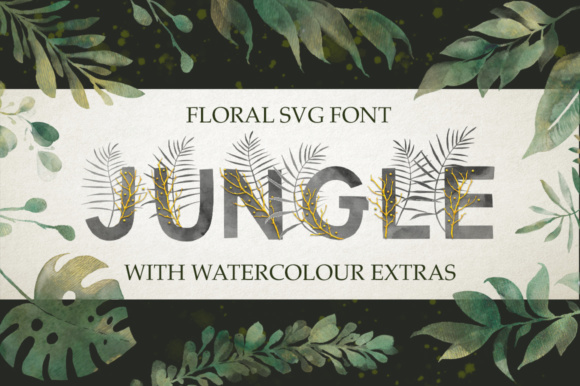
The standout feature of this particular typeface is its construction. It was not simply digitized from a sketch; it was created using watercolor hand-drawn letters and symbols. This specific method results in a texture that is difficult to replicate digitally. The edges of the characters bleed slightly, mimicking the way pigment settles on watercolor paper. This gives the text an immediate tactile quality. When you use this font, you are not just typing words; you are stamping a piece of organic art onto your canvas. The high-resolution quality ensures that these beautiful imperfections remain sharp, whether you are scaling up for a massive poster or keeping it small for a digital icon.
A Complete Visual Ecosystem for Branding
Typography rarely exists in a vacuum. A font usually needs supporting elements to create a cohesive design language. This is where the included assets elevate the package from a simple typeface to a comprehensive design kit. Beyond the letters, Jungle includes 26 separate PNG files of watercolor floral drawings. These are not generic stock images; they are stylistically matched to the typography.
For a brand strategist or a small business owner, this is incredibly valuable. It solves the problem of visual inconsistency. Often, a designer will find a beautiful handwritten font but struggle to find illustrations that match the same artistic style or color palette. Here, the ecosystem is pre-built. You can use the letter "A" for your logo and immediately pair it with the corresponding floral illustration to create a watermark, a favicon, or a pattern for packaging. This synergy saves hours of searching for compatible assets and ensures that the final result looks professional and intentional.
Practical Applications: From Packaging to Digital Presence
Understanding where to use a watercolor typeface is just as important as having it. Because of its distinct texture, Jungle shines brightest in specific contexts where personality is prioritized over stark minimalism.
Packaging and Product Design: If you are in the business of handmade goods—soaps, candles, teas, or artisanal foods—this font communicates the care put into your product. Imagine a label for a lavender honey jar using these watercolor letters. It instantly tells the customer that the product inside is crafted, not mass-produced.
Invitations and Stationery: For wedding planners, event designers, or stationery creators, the aesthetic is paramount. The soft edges of the watercolor script work beautifully for bridal showers, garden parties, or baby announcements. It sets a mood of elegance and intimacy before the guest even reads the details of the event.
Social Media and Content Creation: In a crowded Instagram or Pinterest feed, text needs to stop the scroll. Standard sans-serif fonts can sometimes feel too corporate. Using a watercolor display font for quotes, announcements, or headers on social media graphics adds a layer of artistic flair. It softens the digital experience, making the content feel more approachable and "shareable."
Editorial and Web Design: While watercolor fonts are not typically suited for long blocks of body text due to readability constraints, they are exceptional for editorial headers and website hero sections. A blog focused on travel, wellness, or lifestyle can use Jungle for its main headings to establish a distinct brand voice immediately. It acts as a visual anchor that defines the site's personality.
Balancing Creativity with Readability
One of the most common pitfalls in using decorative or script fonts is sacrificing readability for style. As a designer or marketer, your primary goal is communication. If your audience cannot read the message, the design has failed, regardless of how beautiful it looks.
When working with Jungle, context is everything. It is a display typeface, meaning it is designed for large sizes—headlines, logos, and short bursts of text. You would not use this font for the terms and conditions on a contract or the description on an e-commerce page. Instead, pair it with a clean, neutral typeface. A classic sans-serif or a simple serif font often works best as a companion. This contrast allows the watercolor font to shine without overwhelming the viewer, ensuring your hierarchy is clear and your message is legible.
Commercial Viability and Licensing
For entrepreneurs and freelancers, the utility of a font extends beyond aesthetics; it must be legally viable for commercial use. When investing in a premium font like this, it is essential to review the licensing terms. Most high-quality creative fonts allow for commercial use, meaning you can use them on products you sell, client work, and digital assets. However, checking the specifics regarding "print run" limits or "web font" conversion rights is a professional necessity. Knowing that you have the right to use these beautiful watercolor assets commercially protects your business and your clients, allowing you to design with confidence.
Ultimately, the decision to incorporate a watercolor typeface into your toolkit comes down to the story you want to tell. If your brand or project calls for a voice that is artistic, organic, and deeply human, the combination of hand-drawn letters and matched floral illustrations offers a robust solution. It bridges the gap between traditional art and modern digital design, providing a texture that resonates with audiences looking for authenticity.